New York Employees Can Now Request Their Personnel Files: Is Your Business Ready?
Excerpt: New York employees now have the right to request copies of their personnel files. Learn what this new requirement means for employers, their recordkeeping responsibilities, and the steps businesses should take to stay compliant.
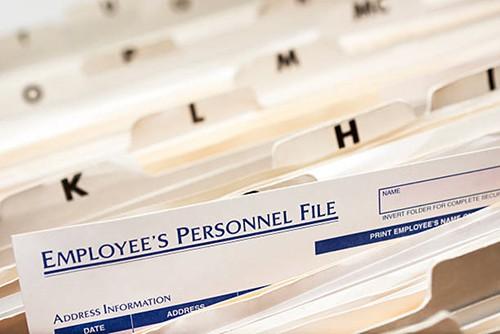
Most business owners keep some kind of file on each employee. It might hold a job application, pay records, performance reviews, and the occasional written warning. Until recently, New York employees had no general legal right to see what was in it.
That changed on November 8, 2026. A new state law now gives current and former employees the right to request copies of their personnel records, and it gives employers a short window to respond.
If an employee asked for their file tomorrow, would you know where everything is and who is responsible for sending it?
What the New Law Requires
On September 9, 2026, Governor Hochul signed Senate Bill S3460, which adds Section 210-b to the New York Labor Law. The law applies to both private and public employers, and it covers former employees as well as current ones.
Under the law as signed, employers must:
• Provide a free copy of an employee’s personnel record within five business days of a written request
• Allow employees to request their records up to twice per calendar year
• Notify an employee within 10 days of placing negative information in their file
• Allow the employee to submit a written response disputing that information
• Keep personnel records for at least three years after employment ends
A review prompted by a negative-information notice does not count toward the twice-a-year limit. The law also prohibits retaliation against employees who use these rights, and violations can result in fines of $500 to $2,500. The New York Attorney General is responsible for enforcement.
What Counts as a “Personnel Record”?
The definition is broad. It generally includes any record that identifies an employee and is, has been, or may be used in decisions about hiring, promotion, transfer, pay, or discipline.
The law specifically lists items such as the employee’s job application and resume, job title and description, pay rate and compensation, performance evaluations, written warnings, signed waivers, termination notices, and other disciplinary records.
Records do not have to sit in an HR cabinet to be covered. A manager’s notes on a performance problem, a supervisor’s departmental file, or records kept by a payroll company or Professional Employer Organization (PEO) may all be part of the picture.
Changes Are Already Expected
When she signed the bill, the Governor noted that parts of it were unclear and reached an agreement with the Legislature to fix them. These changes, called chapter amendments, are expected in early 2027.
According to reports on the agreement, the amendments are expected to clarify that employers do not have to create new files or documents beyond what they already keep. Some reports also indicate the response deadline may be extended to 10 business days.
Until those changes pass, however, the law is in effect as written. Employers should plan around the five-business-day deadline for now.
Why This Matters for Small Businesses
Large companies usually have HR departments and written procedures for requests like these. Many small and family-owned businesses do not.
Consider a business with 15 employees. The owner handles hiring, a manager keeps notes on performance issues, and payroll is run through an outside service. A former employee sends an email asking for their file. If no one recognizes it as a formal request, or if the records are spread across three places, five business days can pass very quickly.
The negative-information notice can be even easier to miss. A written warning placed in a file without telling the employee within 10 days could now be a violation on its own.
There is also a practical lesson here. Anything written in an employee’s file may now be read by that employee. Reviews and disciplinary notes should be factual, specific, and professional.
Steps to Take Now
The law is already in effect, so these steps are worth taking right away:
• Identify every place employee records are kept, including manager files, email, HR software, and outside providers such as a PEO or payroll company
• Confirm that you can get records from any outside provider quickly
• Adopt a written policy explaining how employees can request their files and who will handle requests
• Name one person responsible for responding on time
• Create a process for notifying employees when negative information is added and for accepting their written responses
• Update your record retention schedule to meet the three-year rule
• Train managers to recognize a request and pass it along immediately
• Keep a log of each request, what was produced, and when it was sent
If your employees are covered by a collective bargaining agreement, review it as well. The law does not override an agreement that already gives employees substantially similar access to their records.
Review Your Policies While There Is Still Time to Get Ahead of It
No employer wants to learn about a new obligation from a request it has already missed. A clear policy and a simple process can turn a potential compliance problem into a routine task.
Review your practices and ask:
• Would we recognize a personnel file request if one arrived by email or text?
• Do we know every place employee records are kept?
• Could we produce a complete file within five business days?
• Do we notify employees when a warning or negative review goes into their file?
• Are our records being kept for at least three years after employment ends?
• Will we be ready to adjust once the 2027 amendments pass?
These questions matter for every New York employer, whatever its size. The businesses that prepare now will be in the best position when the first request arrives.
Schedule a complimentary 15-minute discovery call here to review your personnel file policies and recordkeeping practices and make sure your business is ready to respond.
Similar Posts
More legal thinking.
Trusts
Is Your Trust Still Doing Its Job? When to Amend or Restate in 2026
Excerpt: Trust is one of the most important foundations of estate planning. A well-structured trust can help protect your assets, provide for your loved ones, and ensure your wishes are carried out according to your intentions.
Estate Planning
Ran Your Estate Plan Through ChatGPT? What to Know Before You Rely on It
Explore how ChatGPT and AI can support estate planning by helping individuals understand their options, organize important information, and prepare for conversations with an estate planning attorney.
Trusts
Should You Name Both Children as Trustees? Here’s What to Consider
Naming both children as trustees may seem fair, but the right choice depends on their abilities, relationship, and willingness to serve. Learn how to compare trustee arrangements, prevent family conflicts, and keep your estate plan aligned with your wishes.